
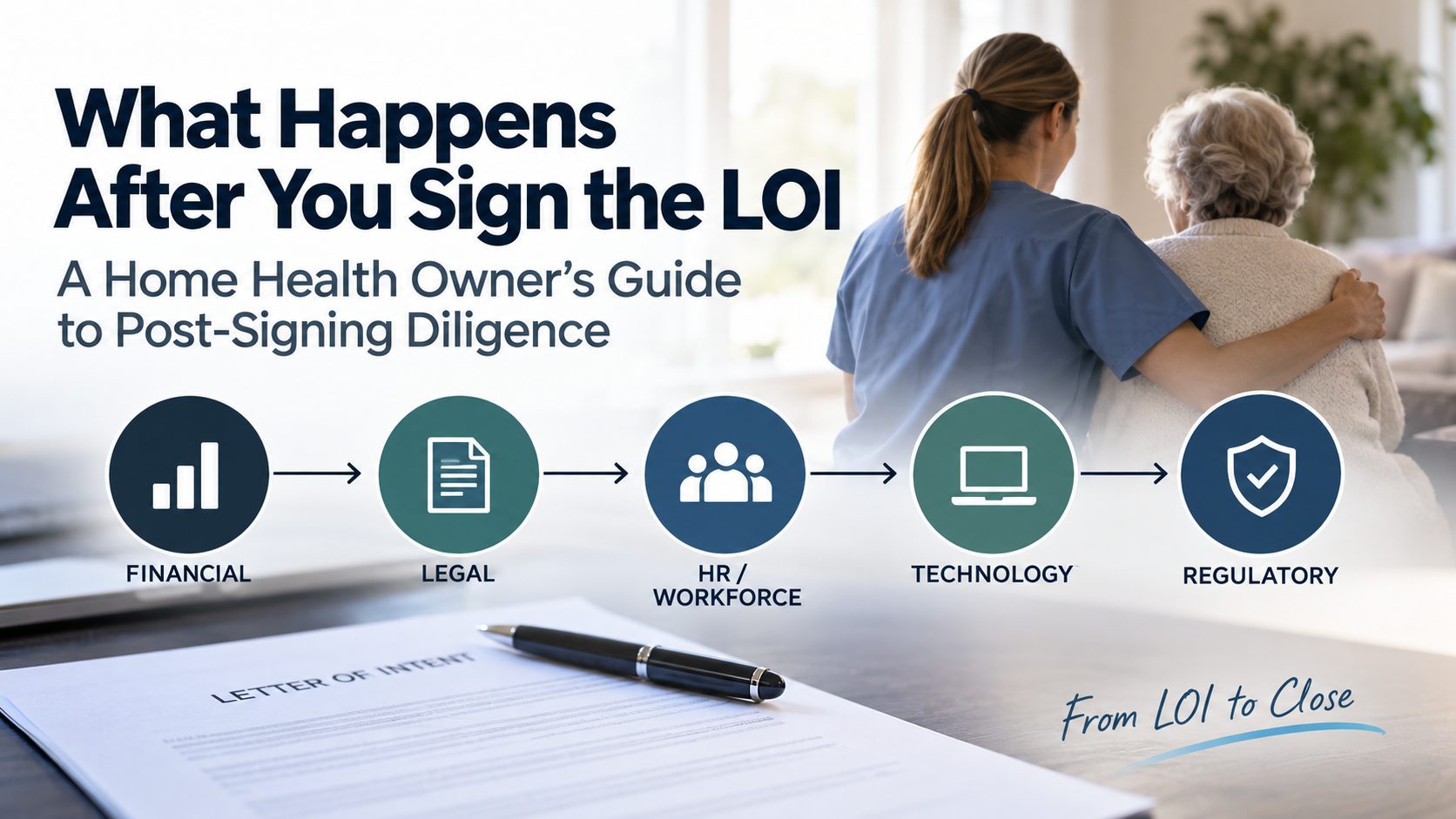
Looked at a home health owner’s file we helped get acquired a few years back. This is to help others in home health prepare for what comes after signing a Letter of Intent (LOI) with an acquirer.
Here’s what to expect across the five areas that matter most.
Financial. Expect your revenue reconciled against Medicare, Medicaid, and private-pay remittances, with close attention to any gap between cash and accrual reporting. If you’ve applied EBITDA add-backs, be ready to back each one with documentation, not just a schedule of numbers. Accounts receivable aging by payer, historical bad-debt write-offs, and your capital expenditure history round out this workstream, buyers want a defensible, normalized picture of earnings.
Legal. Buyers will pull your corporate formation documents, cap table, and governance records, and check every material contract for change-of-control or assignment clauses that could require third-party consent to close. However, we have had acquirers close over consent issues depending on how certain it is to get consent. Litigation and regulatory action history gets reviewed in full, along with any non-compete or confidentiality agreements covering key clinical or administrative staff.
HR / Workforce. This is where home health draws extra scrutiny compared to other sectors. Acquirers will want a complete caregiver and staff census with compensation detail, current licensing and certification records for every clinician, and documentation of your screening and background-check protocols, critical given that your staff work inside patients’ homes. Turnover history, termination reasons, and workers’ compensation claims are standard follow-up items.
Technology. Expect questions about how your EMR, scheduling, and billing systems connect, and whether your Electronic Visit Verification system meets the federal mandate cleanly. Any manual workaround outside your core systems, or a heavy dependency on a single vendor without a backup process, tends to draw follow-up questions.
Regulatory. Verification here centers on your state licensure, any Certificate of Need requirements, and your standing under Medicare Conditions of Participation. Buyers will also review your survey history for deficiencies, your OASIS and quality-reporting compliance, and any correspondence with regulators, clean survey results carry real weight in a home health transaction.
None of this is designed to derail your deal. It’s designed to confirm the value everyone already agreed to. Acquirers aren’t looking for a perfect home health company, they’re looking for a clear, consistent story that matches what was represented before signing. Owners who organize this documentation before the LOI, not after, move through this period faster, field fewer surprise follow-ups, and negotiate from a stronger position when it comes to final terms.
If you’re a home health agency owner considering a sale in the next 12–24 months, we can review your sell-side readiness pro bono.